

What is Autonomous Infrastructure?
A Primer for Rights Defenders, Journalists, and Civil Society
Autonomous infrastructure are technological systems that are independent of, or minimize reliance on, centralized corporate control or other external influences, like a government. Instead, they are designed, maintained and operated by the very organizations, networks or communities that implement and use them.
These systems can include both software and hardware components, and prioritize the use of open source technologies, transparency, decentralization, and user control over data and operations. An autonomous infrastructure approach can enhance privacy and security, it is related to the concept of digital sovereignty— which is the ability of an entity to have control over its digital infrastructure, data, and technological dependencies. What an autonomous infrastructure will look like, and what components it has, is dependent on the needs and risks of those it is being built by and for.
Important Notice: In this article, autonomous infrastructure refers primarily to the definitions and practices used within the digital rights field that are central to digital sovereignty, and where best practices include meaningful human oversight, and caution around the use of AI without human intervention because of the significant risks and challenges it can introduce. As of 2026, however, the term is also used in other sectors to describe fundamentally different kinds of systems — particularly infrastructures governed or managed by AI and machine learning with minimal direct human intervention.
*** Please note, we have compiled a list of trusted companies, resources and tools at the bottom of this artice.

Example of Autonomous Infrastructure in Practice: Benefits and Challenges
Part of your team’s infrastructure includes Slack, which is a corporate solution controlled by a third-party provider that has control and access to your data. Part of your strategy to move to a more autonomous infrastructure may be to move from Slack to an open source alternative such as Mattermost that is hosted on a server fully managed and run by your organization, where access to data and system administration is limited to a small number of authorized people.
In the first scenario, using Slack, you have no control over what data the company Slack may see, and/or who they hand the data over to - essentially, you are trusting the company’s policies, security practices, and how they handle legal and regulatory constraints like subpoenas or compliance requirements.
In the second scenario, using Mattermost, the security and safety of your data is dependent on how well you maintain and run your systems and backend structure, and enforce internal processes and policies. In other words, you have direct control, but also all the responsibility related to securing the infrastructure, preventing breaches, and creating and enforcing policies related to managing access control, backups, etc.
Another example, in 2026, France began migrating over 2.5 million government computers and devices from Windows to open-source operating system Linux because of their desire to break their dependency on American big tech solutions. All ministries are required to have Linux migration plans ready by autumn 2026.
Why Autonomous Infrastructure Matters?
Digital infrastructure is not neutral because ultimately technology is political.
What technical infrastructure an organization or a group uses and relies on directly affects their ability to work safely, communicate securely, and reach their audiences effectively or at a minimum, reducing the risks of interference by a third party (for example, META shadowbanning - ie, restricting the visibility of specific content.) Autonomous infrastructure allows us to:
🛡️ Protect ourselves from censorship and platform control
Reliance on corporate platforms can expose journalists and activists to content removal, shadowbanning, or account suspension, which can silence reporting and disrupt advocacy. Independent news outlets are particularly vulnerable when they report on topics deemed controversial by platforms such as Facebook, X (Twitter), Instagram, and TikTok.
👁️🗨️ Reduce risk of surveillance and targeting
Centralized services may be monitored or compelled to share data with authorities. For example, in 2021 Apple shared, via its transparency report, that they handed over some level of data in response to 90% of the requests made by law enforcement. More independent systems can reduce these risks and limit exposure.
🔐 Exert greater control over sensitive information
Autonomous infrastructure allows individuals and organizations to better control how their data is stored, accessed, and shared, reducing exposure to surveillance or unauthorized access.
🚨Be more resilient during critical moments
During elections, protests, or breaking news, systems may come under pressure or attack. Independent infrastructure can help ensure continued access to information and communication.
🧭 Maintain independence and continuity of work
Journalists and civil society organizations often depend on their digital presence. Autonomous systems help ensure that years of work, networks, and audiences are not lost due to external decisions
.
🤝 Protect the privacy of their sources and community members
Independent systems can help safeguard sensitive communications and protect individuals who may not feel safe sharing information on corporate-owned platforms. It also helps you to protect your data from big tech.
🏢 Reduce their risks associated with centralized, corporate platforms
Large technology platforms collect and share user data, sometimes with third parties or authorities. Reducing reliance on these platforms can help limit exposure to such risks.
When and Why Autonomous Infrastructure Matters for Civil Society, Defenders and Journalists
Journalists, human rights defenders, and members of civil society are often intentionally targeted because of their work. This is why many of them are focusing on building up their autonomous infrastructure, and reducing their dependency on big tech solutions. Specifically, building up autonomous infrastructure can help protect them from a range of digital threats and operational risks, including:
Protection of sensitive data: NGOs and advocacy groups can maintain greater control over sensitive information, reducing reliance on third-party platforms that may introduce additional risks.
Reliable crisis communication: In emergency or high-risk contexts, autonomous infrastructure can support communication channels when commercial platforms are restricted, blocked, or unavailable.
Access in restrictive environments: Information, applications, and services can remain accessible in regions affected by censorship, internet shutdowns, or network interference.
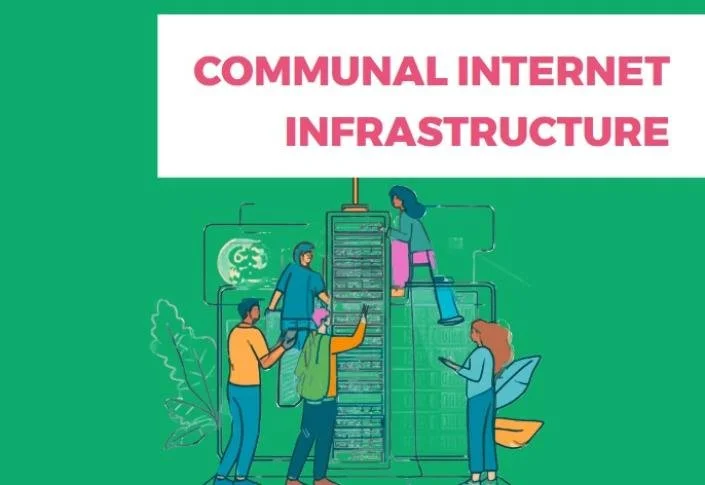
The Association for Progressive Communications (APC) communal internet infrastructure paper serves a foundational guide for groups interested in creating alternative, self-managed digital spaces built upon the values of the community, autonomy and collaboration - while emphasizing democratic management, privacy and user rights.
Challenges: Risks, Trade-offs, and Limitations of Setting Up Autonomous Infrastructure
While the benefits of setting up your own autonomous infrastructure are many, it comes with many drawbacks, especially those operating in low resourced environments.

Requires Technical Setup, Not “Hands-Off”
Hosting your own infrastructure can require significant technical knowledge and ongoing time investment - but it has become an important goal for nonprofits and other civil society entities.
When you use commercial solutions, you are trading losing control of your data and paying a set price to avoid dealing with the operational burden, and overseeing things like patching and security response, 24/7 monitoring, infrastructure provisioning etc. In many cases, when you host your own infrastructure you are fully responsible for this - although there are strategies to mitigate the burden, which we share below.
Additionally, implementation and adoption often requires significant upfront costs and a steep learning curve. For example, when setting up autonomous infrastructure, it is very common to use open-source software that, in contrast to commercial solutions, is typically less plug-and-play and may require more administrator and user education and capacity building.
Similarly, hosting your own tech requires continuous management, including applying security patches, monitoring for vulnerabilities, and ensuring system reliability. All and all, one of the main failures that entities face when mitigating from big tech platforms to open-source, alternative self-hosting solutions, is that they underestimate the complexity of the task.

In Some Contexts, The Operational Burden and Accessibility Of Components May Be Incredibly Challenging
For organizations or individuals, especially those operating in low resourced environments, migrating to more autonomous infrastructure could be incredibly challenging for numerous reasons.
Limitations may include not only financial constraints, but also lack of technical support or expertise, limited time, and restricted (or limited) access to hardware or software. In some countries, such as Cuba due to the embargo, or Russia where certain technologies may be illegal or discouraged to use, it may be difficult to access and maintain software or hardware.
This impacts not just the initial setup, but also long-term maintenance.

More Control Doesn’t Automatically Mean More Secure
While setting up your own infrastructure gives you more control, this doesn't automatically translate to more security. In some cases, this may actually lead to less if the person(s) implementing and maintaining the infrastructure have minimal security expertise, and fail to do basic maintenance functions, like updating software with the latest security patches.
Conversely, corporate solutions don’t always offer good security either, particularly as digital attacks become more common and sophisticated, or security is not baked into the design and evolution of a product.
As an example, in 2016, Uber tried to cover up a security breach that exposed over 57 million customers and drivers. Also, according to cybersecurity specialists, many mobile apps fail basic security. In 2025, one of the largest media corporations, Nikkei, discovered that an infected employee computer exposed 17,368 names and Slack chat histories.
Getting Started and Mitigating Migration Challenges
Building out your autonomous infrastructure can feel daunting at first. However, there are practical ways to reduce the burden, even for smaller organizations.
Just Because You Can, Doesn’t Mean You Should
Just because numerous technological solutions or tools are available, doesn't mean that you should use them. Every additional tool or system you add to your autonomous infrastructure adds operational overhead, meaning less capacity for you or your team to focus on other areas of work. Be thoughtful about why you are adding a solution or tool, and what it will mean operationally. For example, maybe you don’t have to host your own server, but rather use the services of a trusted hosting provider who has experience working with groups in your context, or who face similar threats or risks.
Recognize that Migration Takes Time, and the Biggest Challenge Is Human
One of the biggest hassles in migration is operationally. Transitioning requires time, commitment, and support. It also requires space for learning, and for leaders to model behavior for their group. In this context, migration to autonomous infrastructure should be seen as an ultra long marathon versus a sprint. In many ways, this is why it's so difficult for grassroots organizations with very limited resources who must rely on volunteers that come and go.
Embrace the Grey Strategy or Phased Approach
When entities begin their autonomous infrastructure journey, sometimes their first instinct is to migrate entirely to open source, self-hosted solutions. However, it may be more beneficial to embrace a grey strategy. This means being intentional about where you require full control versus where flexibility is acceptable.
For example, using a commercial website builder may be perfectly reasonable if your site does not store sensitive data and if visiting it poses minimal risk to community members. You may decide, however, to self-host a team chat solution with encryption if members of your organization or network regularly exchange sensitive information via chat.
Alternatively, you could use a phased approach to migration and adoption, having a multi-year strategy that reflects both your capacity and needs.
Using the same example above, you may decide to keep your commercial website building solution for X amount of years, until you are able to migrate key critical areas.
Building slowly and sustainably will be more impactful in the long-run. It will also provide your organization with time to learn and adapt. This is especially important since many self-hosted, open source technologies lack the huge budgets commercial solutions have to develop areas like user interface, sometimes making them a bit more cumbersome to use, or at a minimum, require user education.
Additionally, make sure to choose tools that allow for interoperability and create exit strategies. Choosing tools that allow easy data export or integration with open standards keeps you from getting locked in.
Open Source One-to-One Alternatives to Big Tech Don’t Exist
You will not find one-to-one alternatives to big tech solutions like Microsoft or Google suite. In fact, you probably will not get everything you want in the alternative open source solution you choose. This means you need to be clear about what you can and cannot live without, and accept that you and/or your group will need to adjust your workflow. Alternatively, it's important to recognize that corporate solutions are also not perfect, with some open source developers feeling that users have gotten used to bad tools because they don’t realize the extent of the alternatives available to them. Some questions to consider when formulating your move to a more autonomous infrastructure are:
How big is my group’s user base?
What services do we absolutely need
What are some must-have features that need to be in the alternative?
Where will it be hosted?
Are we able to maintain it in the long run?
Consider Joining a Technology Collective or Researching a Trusted Company
One common strategy used by smaller nonprofits and networks is to join member-run technology collectives. For a modest fee—or sometimes through service exchange—organizations gain access to well-maintained technical systems and experienced support.
More than ever, people are concerned about jurisdiction and want service providers that will support them in the event of censorship or legal pressure. At the same time, rising costs of commercial services are increasingly pricing out smaller organizations, making it harder for them to access essential infrastructure and tools.
Technology collectives usually offer both good prices, but also are value driven. This is because technology collectives are usually member-driven, and participating organizations often have a voice in selecting and configuring tools.
In fact, many exist that are explicitly designed to meet nonprofit needs, prioritizing affordability, transparency, and mission alignment over profit. They range from worker-owned to nonprofit alliances, with diversity in values and approaches as well.
That said, not all collectives operate at the same level of quality or security. It’s important to carefully evaluate any group you join, especially since the technologists managing shared systems may have access to sensitive organizational data.
Additionally, there are companies that are trusted by those in the digital rights field, because of their values, how they operate, the years of experience they have serving defenders, journalists and CSOs.
Seek Volunteer Technical Guidance AND Grow Your Own
Each group or community has access to individuals that have deep technical expertise, and we encourage you to tap them, especially for early decisions, audits, or sanity checks. We have found that many experienced technologists are indeed willing to advise on meaningful projects. The key is to be intentional about how you engage them: come with specific questions, respect their time, and avoid quietly depending on them for ongoing operational support. Volunteer help tends to be episodic and not reliable in the long-term.
Alternatively, if your group or organization can’t afford to hire a technologist, sometimes it's beneficial to invest in a teammate who organically is attracted to the topics of tech and security. Some of the best security experts and technologists in the digital rights field took this path. It's proven to be one of the most sustainable options since, many times, these profiles deeply understand their community’s context, risks and values. However, it requires a long-term investment in their training, giving them space to do this work, versus adding another line item to their responsibilities, and ensuring that their learnings are shared with their wider group. In many cases, pairing this person with volunteer technological experts is a great combo.
🧭 Tips and Best Practices for CSOs, Defenders and Journalists
🔒 Prioritize Security and Encryption
Privacy and security are important for all citizens, but it's especially important for civil society organizations, defenders, and journalists because of the nature of their work. Civil society organizations are reporting “a growing wave of cyberattacks aimed at disrupting their missions.”
Core to privacy and encryption is encryption, which ensures that your data is secure and only read by those your intended parties. Keep in mind, however, that not all encryption is created equally. There are different types of encryption methods, with some designed for high security, others that are outdated, and some that are meant for only basic obfuscation. Currently, technologists are concerned with creating encryption that can withstand future threats from quantum computing, and in response, are working on post-quantum cryptography. (Cryptography is a field in computer science that uses mathematics to develop encryption methods that protect data during storage and transmission.)
👥 Maintain Human Oversight
It is essential that systems are overseen by humans rather than relying solely on automated tools such as antivirus software or other programs. Human judgment can identify patterns, context, and anomalies that machines may miss. Human oversight also helps ensure that systems are being used appropriately, allowing for timely intervention, user support, and education to reinforce proper practices and adherence to policies.
📝 Document Systems Clearly
What this means is that all systems, processes, configurations, and dependencies are clearly recorded and kept up to date so that they can be understood, maintained, and securely managed by anyone responsible for them. This is also essential if there is turnover, and a new person steps into the role of infrastructure administrator.
🧪 Test Failure Scenarios Regularly
Imagining how your system may fail and planning to mitigate the impact is an important part of overseeing your infrastructure. For example, if a tool you use collects information that is important for your group or organization, what happens if that data is accidentally deleted? Are you backing up that data regularly in a secure and reliable way? In another scenario, what happens if your system is compromised or hacked? What steps should be taken in response? Considering worst-case scenarios and preparing for them in advance helps to ensure a faster, more effective response if they do occur.
🌱 Resources and Tools
Check out our list of trusted hosting companies.
Association of Progressive Communications are experts in autonomous infrastructure. While services are only provided to their current network members, they produce numerous amazing publications and articles on the topic including:
We also did a Community Series feature on APC, that we encourage you to check out.
Cloud68.co was co-founded in 2019 by a diverse team of digital rights activists that met at the local hackerspace. The company is based in Estonia, though the servers are in Germany. They host open source infrastructure ranging from web conferencing tools to google analytics alternatives.
Full Stack Journalism is a small community of independent newsrooms that are helping each other make informed choices about the technologies they use, among other goals. They also maintain a public (and maintained) tool list.
Greenet is a coop started in 1985 by environmental activist technologies to devise tools that support networking efforts within the green movement. They also have a history of collaborating and exchanging information with similar networks in other countries, and contribute to the formation of APC, mentioned above. Today, Greenet, based in the UK, provides broadband, email and hosting, and web design and development.
Greenhost is well known in the digital rights field and has been offering a variety of services to civil society, grassroots, and media organizations for years. First, they offer green and sustainable web hosting, from small simple websites to complex setups with multiple VPSes. They fully own and control their hardware, ensuring independence from third parties and proper access control. They also offer a range of managed services, from whistleblowing platforms, to VPNs, to etherpad and Jitsi meet. Most importantly, they can take care of maintenance and monitoring.
Journalism Cloud Alliance, a relatively new collective, provides infrastructure services specially designed for media organisations. Members come from all over the world and include regional networks. Note that while JCA has ambitious goals of having its own servers and services, they are relatively new and are starting small. At this point, they are offering services with easy migration paths: VPS, storage, VPN, and are piloting workspace tools like Big Blue Button to teams already experienced in using such tools. By the end of the year, they should have support and migration teams.
MaadiX is an easy and intuitive tool for managing your own server without the need for any technical know-how. They also offer a variety of applications including storage and synchronization of files, web content management, learning management, distributed social media networks, video sharing, online collaboration, video conferencing, and much more!
May First is a coop based in the US, and is engaged in movement building by advancing the strategic use and collective control of technology for local struggles, global transformation, and emancipation without borders. They provide hosting as well as a Next Cloud document server to members. We also encourage you to check out this piece by them: Politics and practices of an autonomous technology, voices of the members of MayFirst
Sutty: Offers preservation services for old websites that are hard to maintain.
OpenAlternativeis a curated collection of the best open source alternatives to everyday corporate products.